 Choose Language
Choose Language
Choose Language
Did you know the Texas Legislature, not local school boards, decides how much money schools will receive to educate each student? Read on to learn more about how our schools are funded in Texas.
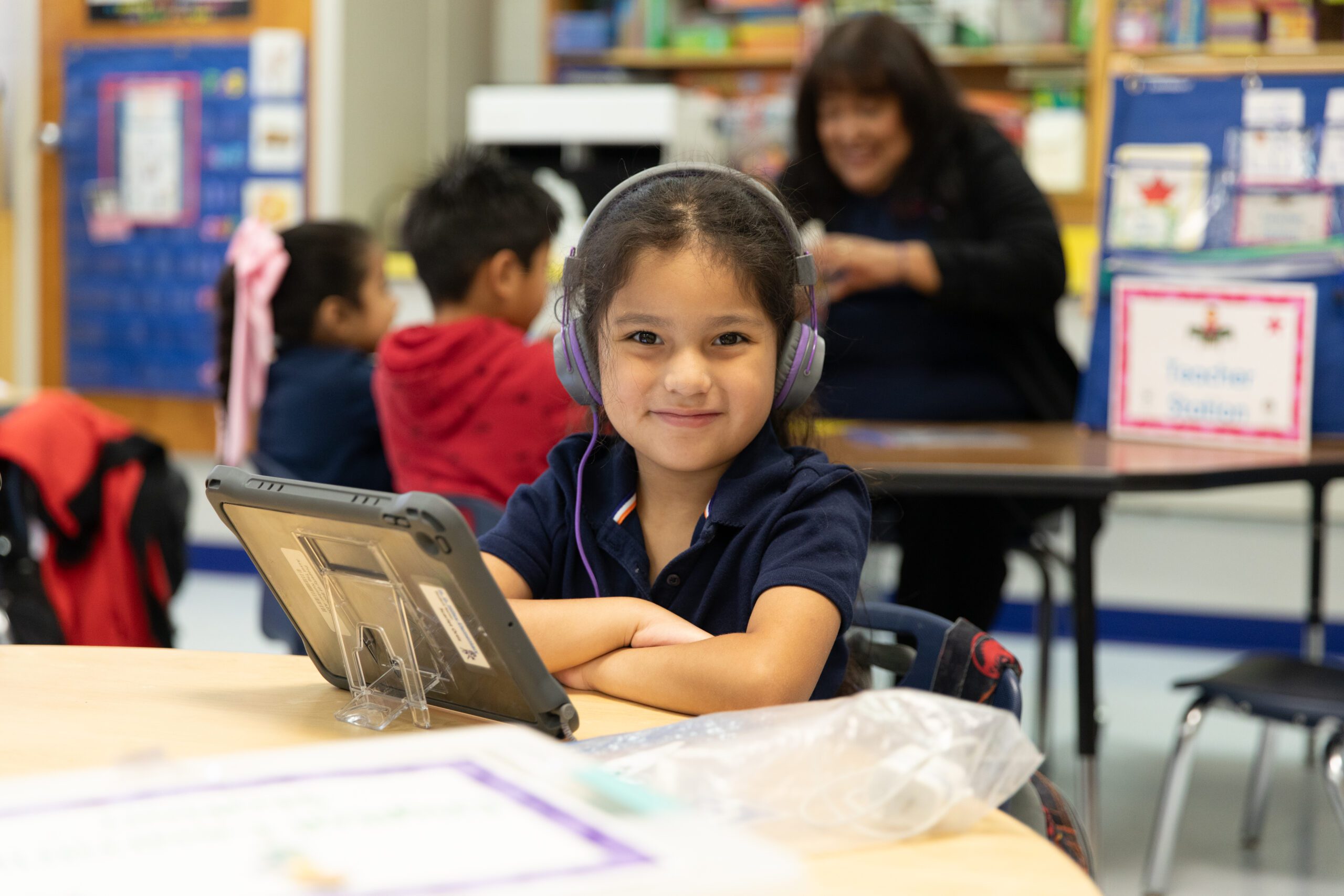
The Texas public education system is the second largest in the country, and funding our public education system is a complex subject. Texas is a diverse state that includes 5.5 million students, 1,200+ school districts, 9,000+ campuses, 374,000+ teachers, and roughly the same number of support staff and administrators, which includes principals, teacher aides, bus drivers, and cafeteria and custodial workers. Thoughtful planning and adequate funding are essential to make this system work for every Texan. During the 89th Legislative Session in 2025, lawmakers passed House Bill 2 (HB 2), which provided $8.5 billion in new school funding. $3.7 billion of this new funding targets teacher pay raises, new funding for support staff, investments in special education, and a new allotment for operational costs. While these investments are meaningful, the reality is that a significant funding gap for public schools still exists. School districts are still digging into their fund balances as they face new challenges, including ongoing state mandates, enrollment declines, and inflationary pressures. Legislators still have work to do to adequately fund our Texas schools.
In Texas, we have an equalized system, meaning that if a local school can’t generate enough local property tax revenue to give them what the legislature sets as the per-student funding amount, the state aid meets the remaining revenue requirements. The primary sources of public school funding are local property taxes and various state funds, including general revenue lottery proceeds and recapture payments. The Texas Legislature decides how much money schools will receive to educate each student, not local school boards or superintendents. The basic allotment is the building block Texas uses to fund students and schools, pay for teachers, as well as pay for the operations of everything that goes on within a campus and a school district. Schools also receive additional funding based on specific student demographics–such as special education needs, qualifying for free or reduced-price lunch, or being in the bilingual program–and district characteristics, like small or midsize districts. During the 89th Legislative Session, the basic allotment saw an increase of $55 per student annually, thereby increasing it from $6,160 to $6,215 per student. The Legislature also created several new allotments to help increase pay for teachers and support staff and keep up with certain inflationary pressures for operating schools. Even with these increases, Texas will still be in the bottom 10 in the country in per student funding.
A school district can get voter approval for another tax, an I&S–or a debt service tax–to fund new facilities and renovations. However, school districts cannot use this tax to fund day-to-day expenses.
State funds, which come from sales taxes, business taxes, and lottery proceeds, are also added. The amount of money the state contributes is directly influenced by the local property taxes generated by a school district. After the state determines the amount each district should receive, local funding is used first to try and reach that amount. If more money is needed, the state will kick in the rest. This means districts with higher property values get less state funding, while those with smaller property tax bases receive greater state support. However, the overall funding levels do not change based on the source of the money.
Considering all these different funding sources, the average school district in Texas receives about $11,500 per student per year. This figure aligns with the amount that flows to school districts for day-to-day operations. The TEA annual report may show a higher per-student amount. This figure includes additional sources such as the TEA budget, federal funds, debt service, and TRS dollars, which are not part of the day-to-day operational budget.
If more money is needed, the state kicks in the rest. In Texas’ complex school funding system, local schools do not receive more funding when local property values and tax collections increase. Instead, the state contributes less money, even though more funds were originally budgeted and intended for public education.
School districts sometimes raise more money via local property taxes than the state allotted for public education. In these instances, the state collects those overflowing funds in an account that holds general revenues for the state. Every legislative session, the state saves billions from local home and business property value growth. The state uses its newfound billions to pay for other items in the state budget or simply holds on to the extra revenue.

Despite our thriving economy and dramatic population growth, Texas ranks in the bottom 10 states nationally for state spending on education. The long-lasting impact of underfunding our public schools is profound, affecting the quality of education and the future of our students.
According to the National Education Association’s 2025 Rankings and Estimates Report, Florida invests $1,161 more, Illinois $9,234 more, Louisiana $5,118 more, Michigan $2,066 more, and New York spends over $19,091 more per student than Texas. Even California, the only public school system larger than our own, spends $6,546 more per student than Texas. We compete with these other states for qualified teachers, exceptional workforce programs, and college readiness — and we are falling behind. Investing in Texas public education and our students will result in better results for kids, including academic outcomes. According to the NAEP (National Assessment of Educational Progress), a national test that students across the country take, the top 10 states in per-student funding tend to outperform Texas, specifically in 4th and 8th-grade reading. More importantly, and beyond test scores, we should invest in our schools because student success inside and outside the classroom is important. Texas students deserve positive, meaningful experiences that prepare them for the future.
A good way to understand how school districts allocate their resources is to examine how each dollar is spent in our schools. Right off the top, over half of every dollar covers instruction and paying teachers – the backbone of our public schools. School districts must stretch their limited resources to educate the state’s 5.5 million public school children in safe, enriching school environments. Two-thirds of every dollar is used for instruction and keeping campuses clean and updated. The remaining third has to be split up and used across many areas needed for well-run schools, such as campus leadership, feeding students, instructional support, counseling, district leadership, transportation, extracurriculars, IT and technology, safety, and health. There isn’t much room to trim.

The rising cost of operating public schools and educating Texas children presents an urgent challenge that the state legislature must address. Our current school funding system doesn’t account for inflation, and school districts have tightened their belts like the rest of us. According to the Bureau of Labor Statistics, school districts are essentially operating with $1,076.55 less in a basic allotment today than they were in May 2019. Inflationary pressure is one of the largest issues facing schools, but there are a lot of other unique budget pressures facing our public schools.
With less buying power, all schools will struggle to retain high-quality teachers, maintain safe and efficient campuses, and preserve programs that our kids and families care about. Every public school student suffers when inflation rises without sufficient additional support.
The 89th Legislature was indeed a transformative session for public education in Texas. Although legislators made strides in public school funding, we’re hopeful they will return in 2027 to further invest in the future of our state. Investing in public school students should be a priority every session because the future of Texas depends on well-funded public schools.
Though the 89th Legislative Session has ended, vital work continues—not just for school district employees, but for all public education advocates. A significant funding gap remains, and until our state can fully close it, our schools will continue to face challenging budget decisions. It is important to continue the conversation with legislators to fully address the school funding issues in our state.
Texas has the resources to do better, and when lawmakers work across the aisle, and across the Senate and the House, Texas public schools, families, and local communities are all better served. We know the Texas Legislature is capable of passing bold, complex measures and making significant investments in key priorities. That is why Raise Your Hand Texas will continue to partner with local communities and advocates to make the case for funding the future of Texas—our public schools and the 5.5 million students they serve across our great state. Tell Texas lawmakers we must do better. Find out who represents you, get in contact with your local regional advocacy director, and have your voice heard.
#FundOurSchools.