 Choose Language
The Tuesday, Nov. 3, 2026 election marked a historic shift in Texas politics, bringing statewide leadership changes not seen in nearly three decades. Texas has not had a Democratic governor since Ann Richards, a Democratic lieutenant governor since Bob Bullock, or a Democratic comptroller since John Sharp. After nearly 30 years of Republican control of statewide offices, the results represent a significant change in the state’s political landscape and could reshape how education policy is developed and implemented.
For public education, the election of Governor-elect Gina Hinojosa brings new leadership with a different set of priorities. During her time in the Texas House, Hinojosa advocated for increased public school funding, higher teacher pay, changes to the state’s testing and accountability systems, and opposition to education savings accounts. In 2025, she filed legislation proposing to fund public schools based on enrollment rather than average daily attendance. These issues could receive renewed attention as the next legislative session approaches.

While Democrats will assume leadership of the state’s top elected offices, control of state government remains divided. Republicans retain control of the Texas Senate, creating a new political dynamic in which statewide leaders and legislators will need to work across party lines to advance legislation and shape state policy.
One of the first developments to watch will be how the Senate organizes under Lieutenant Governor-elect Vikki Goodwin. Senate rules determine committee assignments, the movement of legislation, and important aspects of the budget process. Republican senators could seek changes to those rules that would affect how the chamber operates under its new leadership. The Senate also retains authority to confirm gubernatorial appointments, including the commissioner of education.
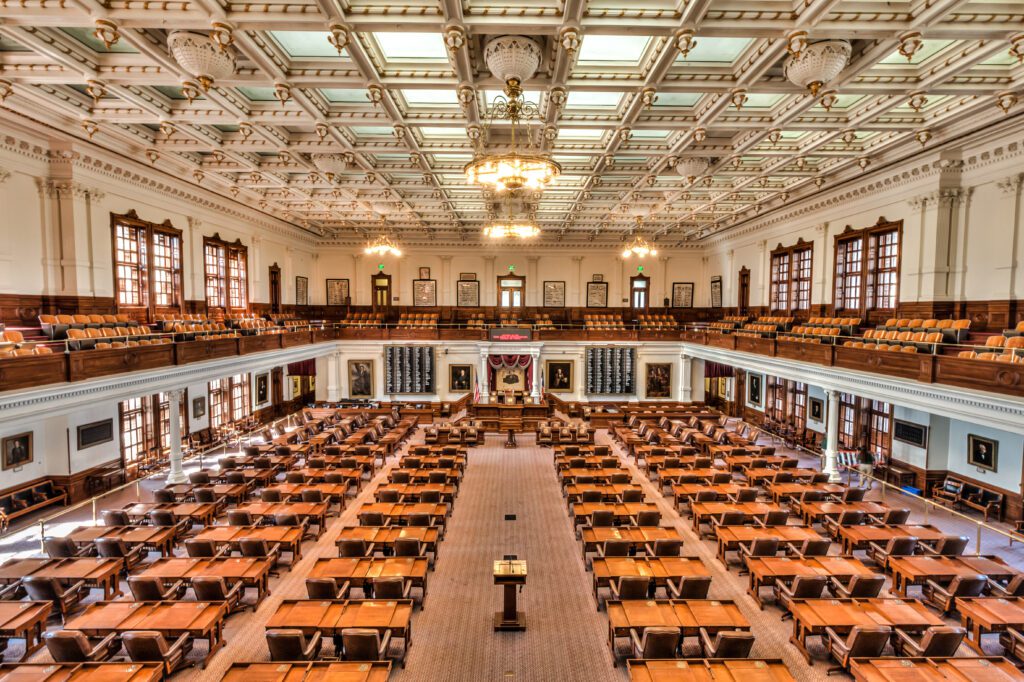
In the Texas House, attention is turning to the speaker’s race. Longtime member and House Dean, Senfronia Thompson, appears to have majority support to lead the chamber when lawmakers convene in January. The speaker helps shape committee assignments and leadership, including for Public Education, Appropriations, and Calendars. Those decisions will influence which issues receive attention and how legislation moves through the House.
Texas has a history of education policymaking across party lines. Former Democratic Speaker Pete Laney served until 2003, while Rep. Paul Sadler chaired the House Public Education Committee from 1995 to 2002 and helped lead a major rewrite of the Texas Education Code under Republican Governor George W. Bush. More recently, Rep. Harold Dutton chaired the committee in 2021 while Republicans controlled the House.
Not every policy change requires the passage of new legislation. The governor and other statewide officials have significant authority through agency leadership, appointments, and implementation of existing laws.
A new commissioner of education could bring a different approach to school district interventions, accountability ratings, and implementation of recently enacted legislation. The potential state intervention in Austin ISD is one example of where agency leadership and administrative decisions could influence the outcome, subject to requirements in state law.
Comptroller-elect Sarah Eckhardt will inherit responsibility for administering the state’s education savings account program, which was established with $1 billion in annual funding. Although changes to the program’s underlying structure would generally require legislative action, the comptroller has an important role in program administration, financial oversight, and ensuring compliance with statutory requirements.
Over time, gubernatorial appointments could also influence the direction of education-related boards and commissions, including the State Board for Educator Certification and the Teacher Retirement System. Changes in the composition of the elected State Board of Education could influence discussions about curriculum standards, instructional materials, charter schools, and management of the Permanent School Fund.
These changes will not necessarily happen immediately. Many board members serve staggered terms, and existing laws continue to govern agency responsibilities. Still, changes in leadership can influence how policies are interpreted, administered, and prioritized.
The election results could also change which education policy proposals receive the most attention.
New statewide leadership, legislative staff, committee chairs, and agency appointments will bring new perspectives and relationships to the policymaking process. Organizations and stakeholders that have played prominent roles in recent legislative sessions may find that some of their priorities receive less attention, while other proposals gain momentum.
For public education, several longstanding policy discussions could return to the forefront. These include increasing the Basic Allotment, adjusting school funding for inflation, addressing declining enrollment, and reconsidering the use of average daily attendance as the basis for school funding.
The relationship between property tax relief and school finance will also remain important. Lawmakers will need to consider how proposals to reduce local property taxes affect state funding obligations and the resources available to public schools.
Assessment and accountability could be another significant area of discussion. With changes to the state’s testing system already underway, lawmakers may consider whether additional adjustments are needed before new assessments take effect. Questions about A–F accountability ratings, state interventions, and the balance between measuring student performance and supporting school improvement could also receive renewed attention.
The future of education savings accounts will likely remain part of the conversation. Lawmakers could debate program funding, eligibility, transparency, and accountability requirements for participating private schools and other providers receiving public funds.
Several questions will help determine the direction of public education policy during the 90th legislative session:
State leadership: How will new agency appointments, legislative committee assignments, and Senate rules influence which proposals advance?
School funding: Will lawmakers consider increasing the Basic Allotment, adjusting funding for inflation, or moving toward enrollment-based funding?
Enrollment changes: How will the state respond to declining enrollment and the financial pressures facing school districts?
Assessment and accountability: Will lawmakers reconsider testing requirements, A–F ratings, and the state’s approach to school interventions?
Education savings accounts: Will the program’s funding, administration, or accountability requirements change?
Property tax relief: How will lawmakers balance continued property tax reductions with the need to fund public schools?
The election results do not guarantee major changes to public education policy. Passing legislation will still require agreement among lawmakers with different priorities, and some proposals may face significant challenges. However, the political environment in which those decisions will be made has changed. New statewide officials, changes in legislative leadership, and evolving relationships among policymakers could create opportunities for different ideas to receive consideration.
Texas also enters the next legislative session in a relatively strong financial position, with higher than projected revenue collections, a substantial Rainy Day Fund, and billions in federal reimbursements. While the state faces significant financial commitments and competing priorities, lawmakers will have considerable resources available as they develop the next two-year budget. Together, the changes in political leadership and the state’s financial outlook could shape important discussions about future investments in public education.
For Texas public schools, the coming months will help determine how these changes translate into policy. The fundamental questions remain familiar: how to adequately fund schools, support teachers, measure student success, and ensure that every Texas student has access to a high-quality public education.


Texans are proud. We love our state. Our pride runs…

At Raise Your Hand Texas, we believe public education is…

For more than 80% of Texas schools, an A-F accountability…