 Choose Language
Choose Language
Choose Language

The recent changes to House Bill 8 have a direct and significant impact on how Texas schools are evaluated. The Texas Tribune has the full story on why one test on one day shouldn’t be the final word on student success. Read the article by Sneha Dey and Jaden Edison to understand what’s at stake and why this bill is so important to Texas’ future:
On Tuesday, August 26, the Texas House gave final approval to House Bill 8 (HB 8), the session’s major assessment and accountability measure, by a vote of 82–56. The bill makes changes to the state’s testing system by creating a new “through-year” assessment model and changing how lawsuits and rating challenges are handled.
A key amendment from Chairman Rep. Brad Buckley accelerated the timeline for integrating student academic growth into accountability ratings, extended timelines for rating challenges, refined testing requirements for students in special programs, and authorized new accountability studies. Lawmakers also adopted provisions to keep the current prohibition on kindergarten testing in place and to scale back testing to the federal minimum. A separate proposal to delay implementation and create a commission study did not advance.
Overview of HB 8 as Adopted by the House:
Transparency: Requires TEA to publish, by September 1 each year, the number of questions on each STAAR test, the cut scores, and scale scores. TEA must also post the full testing calendar two years in advance.
On the night of Wednesday, August 27, the Texas Senate voted 21–5 to adopt HB 8, advancing school assessment and accountability legislation. During the very brief discussion on HB 8, Sen. Paul Bettencourt offered the only amendment, which includes:
With Senate passage, HB 8 now returns to the House, where members will decide whether to accept the Senate’s changes or request a conference committee to reconcile differences between the two versions.
The Comptroller’s Office has proposed rules to launch the new Education Savings Account (ESA) program authorized by Senate Bill 2. The rules outline how families can apply, what counts as an eligible expense, how funds are distributed, and how providers or vendors may participate. They also set procedures for oversight, suspensions, and appeals.
A key definition in the proposal is “assessment instrument,” which means either taking one nationally norm-referenced test (not criterion-referenced as required for public school students), which compares a child’s performance to peers across the country, or a test that meets state standards. The Comptroller notes the rules carry no new fiscal impact beyond what the law requires, and the public has 30 days from August 22, 2025, to submit comments.
You may submit comments on the proposal to: Education Savings Account Program, Educational Opportunities and Investments Division, 111 E. 17th Street, Austin, Texas 78701, or to the email address: Esa.Rule.Comment@cpa.texas.gov.
Attorney General Ken Paxton has instructed Texas school districts to comply with Senate Bill 10, which requires the Ten Commandments to be displayed in every classroom beginning September 1, 2025. While schools are not required to purchase displays, they must accept and post any donated copies that meet the law’s requirements.
A federal court has temporarily blocked implementation for a group of districts involved in ongoing litigation, including Alamo Heights, North East, Austin, Cypress-Fairbanks, Lackland, Lake Travis, Fort Bend, Houston, Dripping Springs, Plano, and Northside ISDs. According to Attorney General Paxton’s press release, all other Texas districts must follow the law’s provisions once it takes effect.



At Raise Your Hand Texas, we believe public education is…

For more than 80% of Texas schools, an A-F accountability…
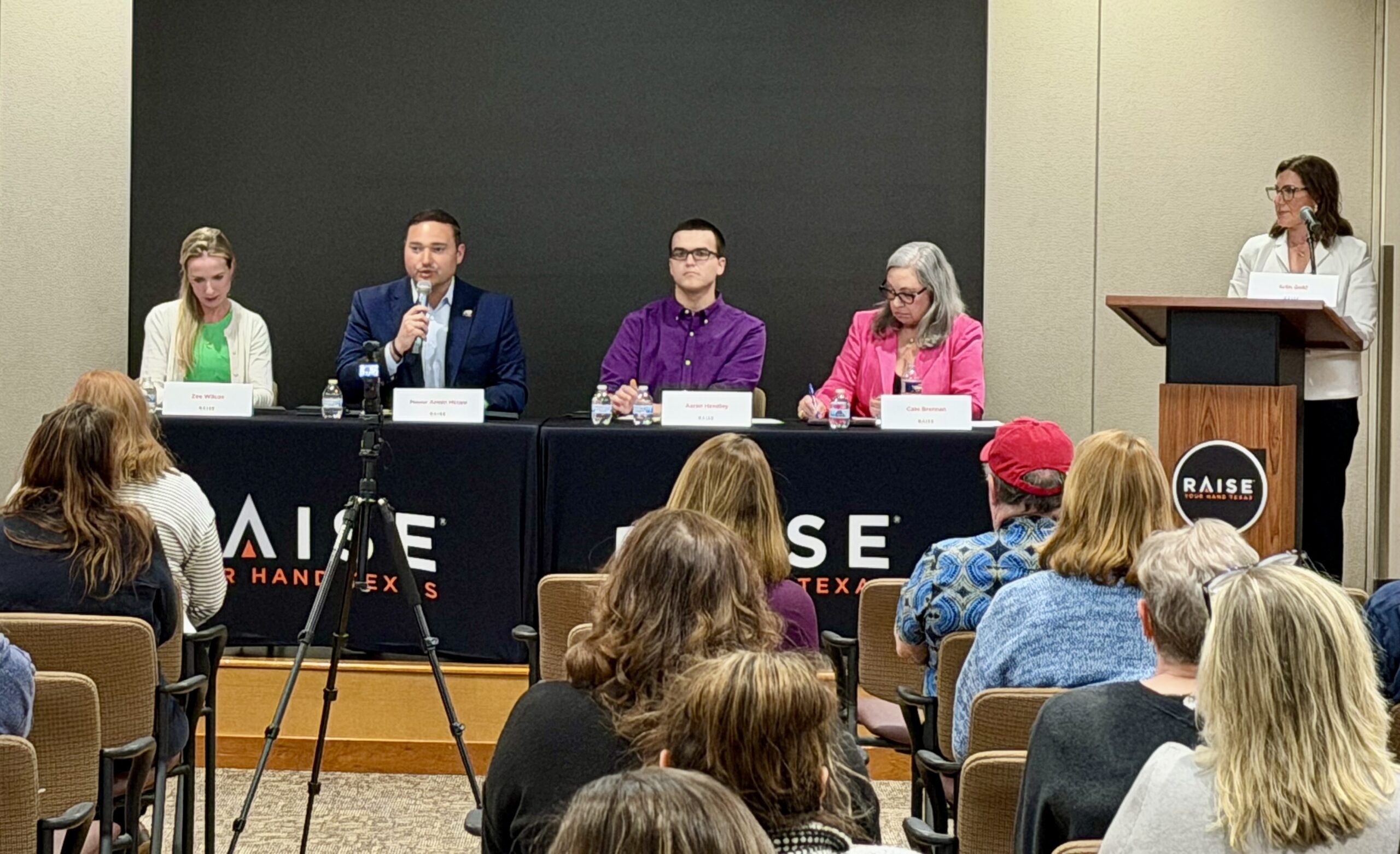
Raise Your Hand Texas hosted candidate forums and town halls…